
What Motorised Roof Lantern Blinds Cost in Scotland
A roof lantern fills a room with light, which is exactly why people put them in. The trouble starts on the first bright morning, when the glare is too much, the room overheats by lunchtime, and there is no easy way to soften any of it.
A made-to-measure motorised roof lantern blind solves that. It is one of the most popular things we fit, and one of the questions we are asked most often is a fair one: what does it cost? This is a clear guide to the figures, based on the quotations we have prepared for homes across Scotland.
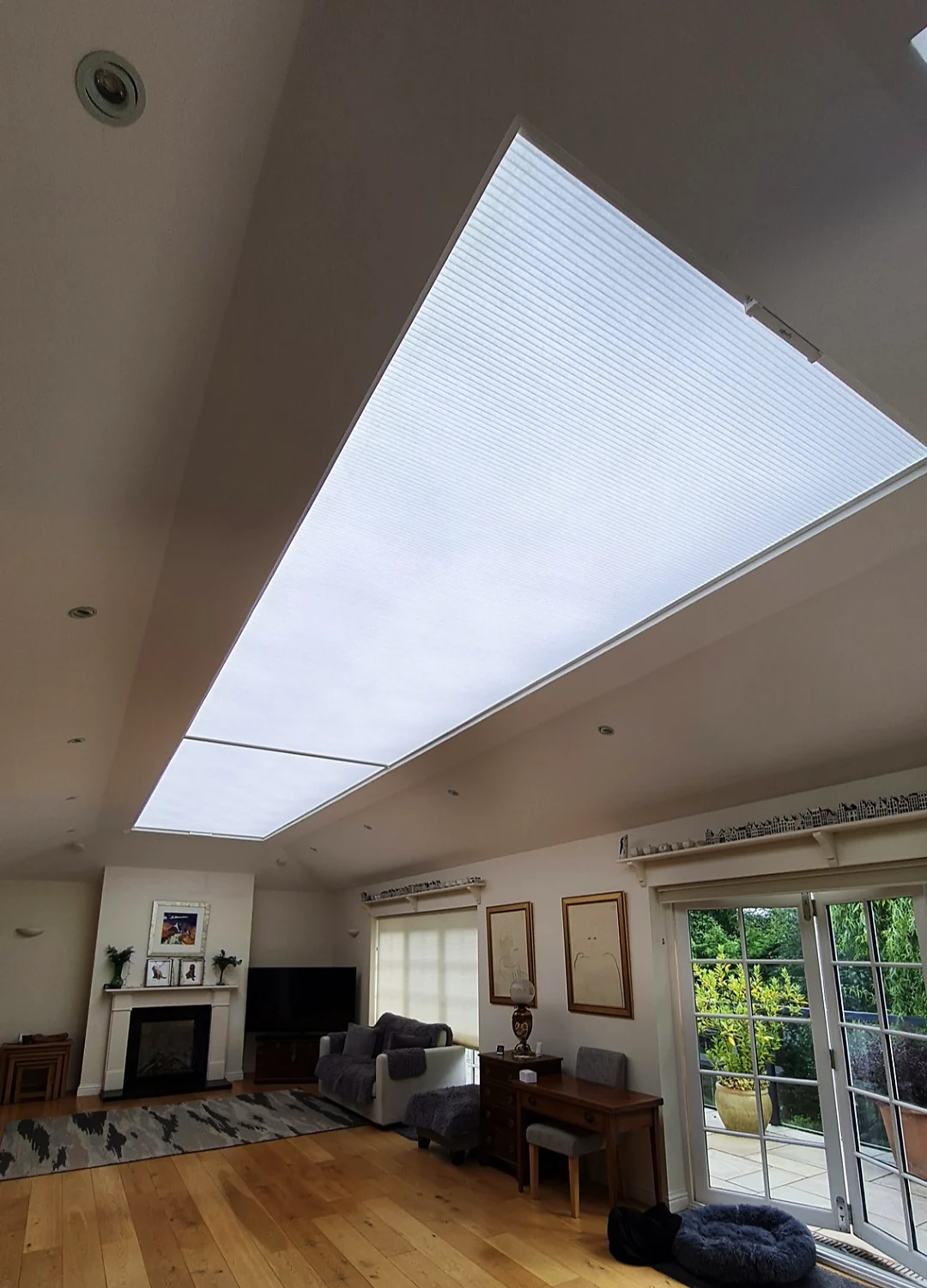
Why a roof lantern needs a special blind
A roof lantern sits overhead, often well out of reach, and the glazing is set at an angle. An ordinary blind cannot cope with that. It needs to span the opening, hold its shape against gravity, and operate without anyone standing on a stepladder.
The system we fit is a cellular (honeycomb) blind built specifically for overhead glazing. The honeycomb structure traps a layer of air inside the fabric, which is what gives it real insulating value, keeping heat out in summer and holding warmth in through the winter.
The cable-free difference
This is the detail that separates a good roof lantern blind from a cheap one, and it is worth looking at closely before you buy. Most cellular blinds fitted overhead are held in place by a web of thin steel support wires and spooling cords stretched across the glass. Count them on a typical installation and there are commonly six, eight, sometimes ten of them, running the full length of the blind. They are there whether the blind is open or closed, and once you have noticed them you cannot un-notice them. On a roof lantern you chose as a feature, that is a lot of clutter strung across the one thing you put in to enjoy.
Up to two metres wide, the system we fit has none of it. No support wires, no spooling cords, nothing crossing the glass. When the blind is retracted, the opening is completely clear apart from the slim frame around the edge, so you get your roof lantern back exactly as it was meant to look.
For wider openings, up to three metres across, the blind needs just four fine support cables, still a small fraction of the six to ten you would see on an ordinary overhead cellular blind. For something you paid good money to put in, keeping it clear matters.
How it sits, and why it helps with heat
The blind is fitted at the ceiling line of the opening, deliberately as far from the glass as possible. That leaves a generous pocket of air between the fabric and the glazing, and that air pocket is doing useful work. It slows the heat coming down into the room on a sunny day and slows the warmth escaping on a cold night.
On a hot, still day with the blind fully closed, we suggest leaving a small gap of around 30mm at the centre so the warm air in that pocket can rise and circulate out. It is a small habit that keeps everything comfortable.
Power, control and wide openings
These blinds are fully motorised. There is no pull cord and no operating pole, which is the only sensible answer for something fitted overhead. You operate it from a handset or a wall switch.
Power comes from a rechargeable battery built into the head of the blind. In a typical home it needs recharging every three to six months depending on use, and it is recharged in place using the supplied charger, so there is nothing to remove or take down. For larger or commercial openings, the blind can instead run from a mains connection.
A single blind suits an opening from around 400mm to 3,000mm wide, and up to 3,600mm long. If the opening is longer than that, we fit a twin system: two blinds, one at each end, meeting neatly in the middle, which covers lengths up to around 5,000mm. Either way, the blinds stack out of the way when open, so the finish stays clean.
Key things to remember
- A motorised system is the right answer for overhead glazing you cannot easily reach
- Wire-free up to two metres wide, leaving your roof lantern clear when the blind is open
- A single blind fits openings from 400mm to 3,000mm wide and up to 3,600mm long, with a twin system for lengths up to around 5,000mm
- The air pocket above the fabric helps with both summer heat and winter warmth
- Translucent or room-darkening fabric is your choice, and it affects both the look and the price
What it costs
We have always been straight about pricing, so here are real figures rather than a vague “it depends”.
Based on the quotations we have prepared recently, a single motorised roof lantern blind, with site measure, delivery, fitting and VAT all included, typically falls between around £1,200 and £1,700. A small rooflight can come in a little under that. A large single blind, or a step up to a premium room-darkening fabric, can take a single past £2,000.
Where a room has more than one rooflight, or the opening is wide enough to need a twin system, the figure rises with the number and size of the blinds. Larger multi-blind projects we have quoted have ranged from around £2,400 to nearly £9,000, depending on how many openings there are and how big they are.
The things that move the price are straightforward: the size of the opening, how many blinds the room needs, your choice of fabric (a translucent fabric that softens the light, or a room-darkening fabric that blocks most of it), and whether the opening needs a single blind or a twin.
You can get an instant indicative figure for your own rooflight with our roof lantern blind price calculator. Enter the width and length of your recess and it returns a translucent and a room-darkening price, fully fitted and including VAT.
Every figure above is a fully fitted price. It covers a proper site survey, the made-to-measure blind, delivery and professional installation by our own team, never a subcontractor. The blinds carry a five-year guarantee on fabric, motors and mechanisms, with labour and travel on any warranty work covered at no charge for the first year. Typical lead time is around ten to twelve weeks from your confirmed measurements.
Ready to explore your roof lantern?
Every roof lantern is different, so the simplest way to get a firm price is this: send us a few photos of your rooflight along with some rough sizes, and we will prepare a written quotation. If the quotation suits you, we will arrange a site visit to measure up precisely and confirm everything before anything is ordered.
If you would like to see the options first, you can browse our roof lantern blinds or look at our motorised range. When you are ready, get an instant price and send us your photos or request a brochure. There is no pressure and no hard sell, just clear advice from a company that has been fitting shading across Scotland since 1987.
Frequently asked questions
How much do motorised roof lantern blinds cost? Based on our recent quotations, a single fitted blind typically costs between around £1,200 and £1,700 including VAT, measuring and installation. Smaller rooflights can be a little less. A large single blind can exceed £2,000, and rooms with several openings or a twin system cost more again, in line with their size.
Can you get blinds made for a roof lantern? Yes. Roof lantern blinds are made to measure for the exact size and shape of your opening. An off-the-shelf blind will not fit an overhead, angled lantern properly, which is why a survey and a bespoke blind are needed.
What size of roof lantern can have a blind fitted? A single blind suits an opening from around 400mm to 3,000mm wide and up to 3,600mm long. For longer openings we fit a twin system, with one blind at each end meeting in the middle, covering lengths up to around 5,000mm.
Do roof lantern blinds have visible wires? Up to two metres wide the systems we fit are completely wire-free, retracting to leave the opening clear apart from the slim perimeter frame. Wider openings, up to three metres, use just four fine support cables, far fewer than the six to ten on an ordinary horizontal cellular blind.
Do roof lantern blinds help with heat? They do. The honeycomb fabric and the pocket of air it sits above slow heat gain in summer and heat loss in winter, which helps keep the room more comfortable through the year.
How are roof lantern blinds powered? They are fully motorised, with no cords or poles. Power comes from a rechargeable battery built into the head of the blind, recharged in place with the supplied charger, or from a mains connection for larger openings.
How long does it take to have roof lantern blinds fitted? The typical lead time is around ten to twelve weeks from confirmed measurements, after which our own installation team fits them. We do not use subcontractors.
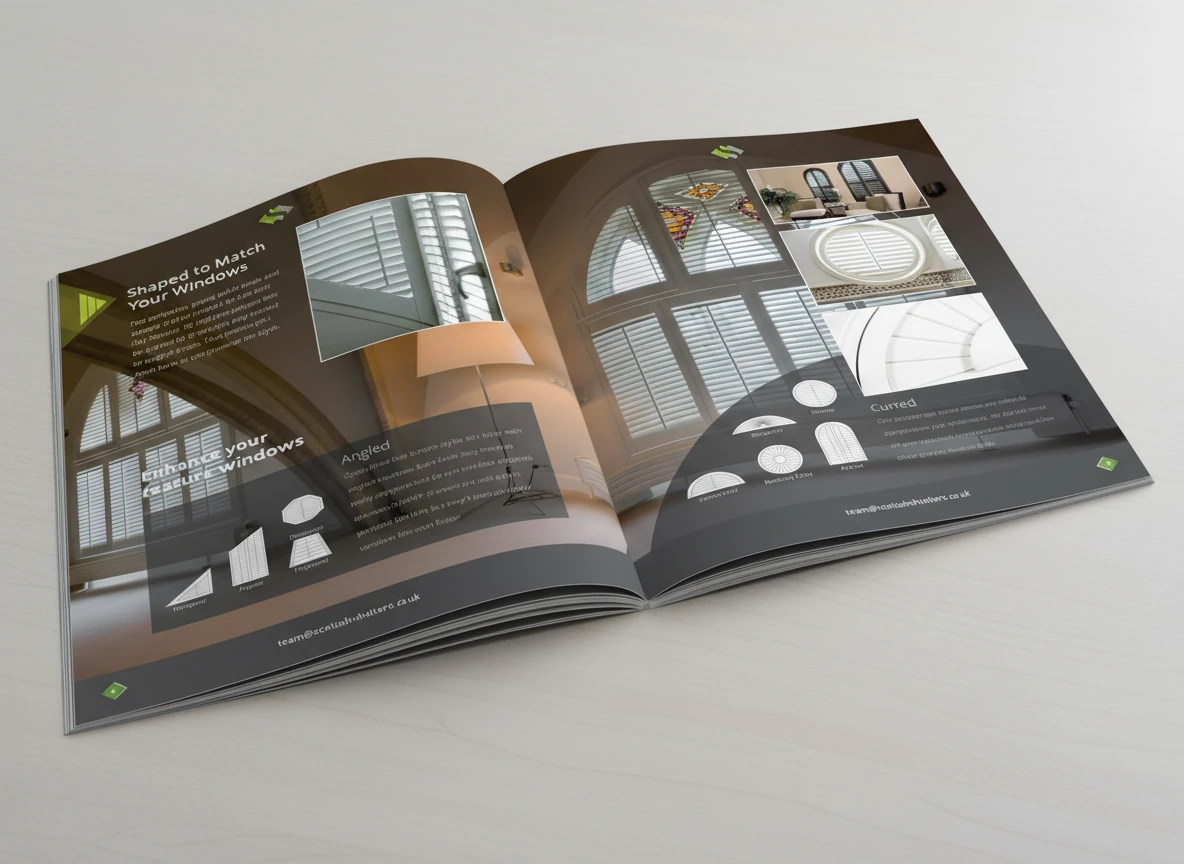
Inspired by what you've read?
Request a brochure or arrange a no obligation consultation.