

Do Shutters Block Out Light? A Clear Light Control Guide
Window shutters are a popular choice for homeowners.
Adding a timeless elegance to any room, there’s no doubt that they look stylish. But what about light control? Do window shutters block out light?
This blog explores the light-blocking capabilities of window shutters, helping you to decide if they are the perfect solution for your home. By the end, you’ll understand how window shutters can enhance your home’s light control and aesthetics.

Light Control: Room Darkening Vs Blackout
When discussing whether window shutters block out light, it’s important to understand the difference between room darkening and blackout solutions.
Room Darkening
Room darkening window coverings significantly reduce the ambient light level in a room.
Room darkening window coverings don’t diffuse light, as with some blinds and curtains; they stop light from entering through the covering itself. Light still finds its way around the edges, so they do not make a room 100% dark. They suit rooms where you want it dark but don’t need total darkness.
Blackout
Blackout is the word people use when they want no light at all. It describes the fabric, not the room: no light can pass through a blackout fabric, but light still gets around it, and even side channels only cut that down rather than stop it. People asking for blackout usually have one of these in mind:
- Bedrooms that face the rising sun
- People who are sensitive to light
- Rooms near street lamps
- Children’s rooms
- Cinema rooms
Will Window Shutters Block Out Light?
One of the main features of window shutters is their superior light control. We’ll cover the other benefits further down, but first, let’s explore the factors which affect a shutter’s ability to block out light.
Shutter Style
Window shutter is a bit of a ‘catch-all’ phrase. It is often used synonymously to mean shutters with louvres in general. The types of shutters are:
- Full-height shutters. Often just called window shutters. These feature adjustable louvres from top to bottom, giving you control over light levels, efficient noise reduction and total privacy when shut.
- Tier-on-tier shutters. These look similar to full-height shutters, but each shutter is split into two sections, each individually-operable. Tier-on-tier shutters are ideal for living spaces because they are flexible, providing multiple options for letting light in throughout the day.
- Cafe-style shutters. This type of shutter covers only the lower half of your windows, leaving the top division bare and able to let beautiful sunshine stream in. Cafe-style shutters provide little light control because of this but are ideal for maintaining high privacy levels.
Solid panel shutters are a further option. We haven’t included them on the list above because they are not louvred, instead consisting of a single solid panel of wood per shutter.
Because they are made from one piece of wood, solid panel shutters have no louvre gaps, so they darken a room more than any louvred shutter can. However, they offer no flexibility for light control; the panels are either closed or folded open, and closed panels still have a small clearance around their edges so that they can swing.
Louvres
Answering the question ‘Will shutters block out light?’ also comes down to the louvres themselves. Louvres are angled slats fixed at regular intervals, and many shutters have them, as we’ve seen above.
Louvres can be adjusted to redirect light into a room while allowing air and light to pass through the shutter. Slightly angled louvres enable you to enjoy the natural light and beautiful sunshine coming in from the outside. To close out the light as much as possible, you angle the louvres fully closed, and that is where the honest answer to the question lives.
Louvres move. For anything to move, there has to be a gap for it to move in, and on a shutter those gaps sit along every louvre edge and around every panel. They are not a fault. They are what makes the louvres work. They are also where the light sneaks through. Closed louvres reduce the ambient light level in a room a long way, but a louvred shutter can never be described as blackout, or anything close to it.
There are different sizes of louvres available, typically ranging from 47mm to 114mm. Wider louvres allow more light when they are open or angled, and narrow louvres provide greater light control because they restrict the light more significantly when angled.
What If I Want The Room Darker?
So do window shutters block out light? Closed louvres reduce the ambient light level a long way. If you want the room darker than that, shutters on their own won’t get you there.
But what if you’ve set your heart on window shutters? What if nothing else will do?!
First of all, decide how dark you really need it. Most people find that a room darkening level is dark enough. If you need more than that, the answer is Shutter ’n Shade: a shutter with a room darkening blind built into the frame, running in its own side channels. It is one product, not a shutter with a blind bolted on behind it. Use the louvres alone during the day and pull the blind down when you want it dark.
With louvred panels, Shutter ’n Shade gives really good room darkening. With solid panels and the blind down, it is the darkest a shutter can get.
Other Benefits Of Window Shutters
Do window shutters block out light? Closed louvres reduce the ambient light level in a room. They don’t black it out, and nothing with moving louvres can. The advantages don’t stop at light control, though.
Privacy
Closed window shutters block the view in from outside, and you can adjust the louvres to control the amount of visibility you’d like. This allows in natural light while maintaining privacy.
Sound
Solid wood window shutters, in particular, provide a great barrier to noise pollution. Thicker louvres can also help to block out unwanted sounds.
Temperature
When closed, window shutters reduce heat transfer and help regulate indoor temperatures. In the heat of the summer, closing your window shutters blocks out the burning sunshine and keeps your home cooler. In winter, they act as insulation and reduce your heating costs.
Maintenance
Properly installed window shutters are simple to maintain compared to other shading solutions. Made with durable materials and often finished with scratch and stain-resistant applications, their flat surfaces can be easily cleaned.
Style
Window shutters combine elegance with impressive functionality, fitting seamlessly into most inside spaces. Another huge benefit of adding shutters to your home is that they can hike up your property’s appeal.
Safe
Unlike the dangling cords of many blinds, not to mention curtains that can be yanked down accidentally or difficult to clean, shutters provide a risk-free window covering for family homes. They also act as a barrier for open windows, meaning you can enjoy the fresh breeze whilst restricting access to children and pets.
Window Shutters: Popular For Good Reason
On top of a multitude of benefits, window shutters give you more control over daylight than almost any other window covering. Closed louvres reduce the ambient light level in a room, and when you need it darker still, Shutter ’n Shade is there. They are a versatile window treatment solution, and they look incredible in all sorts of interiors.
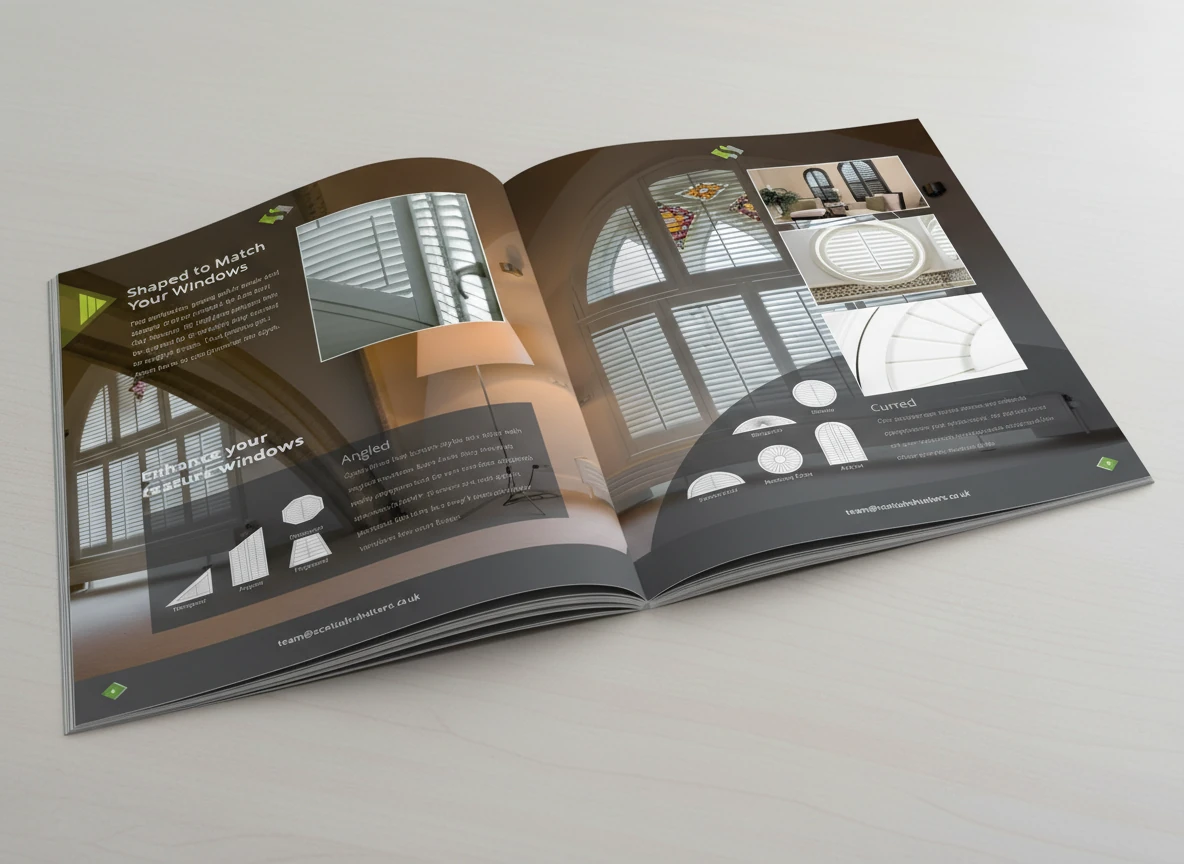
Ready to explore our range of window shutters? Request a copy of our brochure here and find out what we’ve got to offer.
Inspired by what you've read?
Request a brochure or arrange a no obligation consultation.