

Perfect Fit® Shutters: The Hidden Risks Before You Buy
You’ll have seen them advertised everywhere, Perfect Fit® shutters, sometimes branded as “no-drill,” “click-fit,” or “clip-on” shutters. The pitch is hard to argue with on paper. No mess, no fitter, no fuss, no holes in your nice new uPVC frames. They arrive in a flat box, you pop them in with a credit card, and twenty minutes later your window looks magazine-ready.
It’s a clever idea. The trouble is, the brochure version leaves out three rather important things, and at least one of them can get expensive in a hurry.
How Perfect Fit® Shutters Actually Work
Before we get into the problems, it’s worth understanding what’s going on mechanically, because the issues all stem from the same installation method.
A traditional interior shutter is fitted to a hardwood frame which is itself screwed to the wall or recess around the window. The frame stands a comfortable distance away from the glass, the panels hinge open like a cupboard door, and the whole assembly is mechanically independent of the window unit. Cleaning the glass is a simple matter of opening the panels.
A Perfect Fit® shutter works on a completely different principle. Small plastic or metal brackets are forced into the gap between the glass and the rubber glazing gasket, the black or grey seal you can see running around the edge of every uPVC window. The brackets effectively pinch the gasket to anchor themselves, and the shutter panel then clips onto the front of the brackets. The whole shutter is held in place by the friction of those brackets compressing the gasket against the glass.
That’s the design. And depending on the window, the gasket, and the installer’s enthusiasm, it’s where the trouble starts.
Problem One: Your Window Warranty May Not Survive It
Most modern uPVC double-glazing comes with a warranty of ten years or more, covering sealed unit failure, frame defects, and general structural integrity. What that warranty almost universally excludes is damage caused by anything fitted to the window after installation by a third party.
Now, plenty of Perfect Fit® retailers will cheerfully tell you their product doesn’t affect your warranty. Sometimes that’s true. Sometimes it isn’t. The plain answer is that it depends entirely on your window manufacturer’s terms, and you’d be wise to read them before anyone starts shoving plastic brackets into your gaskets.
This isn’t a theoretical concern, and the shape of the problem is always the same. Something goes wrong at the window, damp, a draught, a failed seal. The homeowner claims on the window warranty. The manufacturer looks at the brackets wedged into the gasket and points at those instead.
Whether or not the blinds were genuinely the cause is almost beside the point. Once a manufacturer has grounds to argue that the integrity of the sealed unit may have been compromised by an aftermarket installation, you’re in a dispute. And disputes with a large window company aren’t a fight most homeowners want to take on.
If your windows are still under warranty, and especially if they’re on a new-build property where the developer’s warranty is critical, this is a conversation worth having with your window installer before any clip-fit product goes near them.
Problem Two: Cleaning the Glass Becomes a Job
This one isn’t a safety issue. It’s just a quality-of-life issue that nobody mentions until you’ve lived with it for a few months.
With traditional interior shutters, cleaning the inside of your windows is straightforward. You merely hinge the panels open like cupboard doors, wipe the glass, and close them again. It’s a 30-second job per window.
With Perfect Fit® shutters, the panels are not hinged. They’re clipped directly onto brackets that sit immediately in front of the glass. To clean the window, or to deal with condensation, which any south- or east-facing window will produce in a Scottish winter, the entire shutter has to come off. You unclip it, set it somewhere safe, clean the glass, and then re-clip the shutter back into place.
That’s fine the first time. By the third or fourth window in a row, on a Saturday morning when you’d rather be doing literally anything else, it stops being fine. And because the panels are sized to fit precisely within the glazed pane, they’re awkward to handle and easy to drop. People stop cleaning their windows. Or they leave the shutters off entirely and stack them in a corner of the bedroom “until they get round to putting them back.” We’ve seen both outcomes more than once.
Problem Three: The Heat Trap Against the Glass
This is the technical issue, and it’s the one that can genuinely damage your home.
Perfect Fit® shutters sit much closer to the glass than a traditional interior shutter, by design, since the whole point of the system is to integrate flush with the glazing for a tidy look. But that proximity puts them well inside what the glazing industry recognises as the critical clearance zone for thermal stress.
The published guidance from glass manufacturers and window engineers is consistent: internal blinds and shutters should be installed at least 50mm away from the glass surface to allow air movement behind them and prevent heat building up between the covering and the glazing. This figure comes from glazing-industry sources including window manufacturer Viking and is echoed by glaziers’ association guidance internationally (the US equivalent recommends “2 inches,” which is the same distance). Perfect Fit® shutters routinely sit at a fraction of that distance.
Here’s what happens on a sunny day, particularly on a south-facing window:
- Sunlight hits the louvres (especially when they’re tilted closed) and heats them up.
- The trapped air between the back of the louvres and the glass has nowhere to go.
- The centre of the glass gets significantly hotter than the edges, which are still shaded by the window frame and gasket.
- This temperature differential creates internal stress in the glass, the hot centre wants to expand, the cool edges don’t.
- In modern energy-efficient glazing (particularly Low-E coated glass, which absorbs more solar heat by design), that stress can be enough to crack the inner pane.
A thermal stress crack has a very distinctive signature, described by glazing engineers: it starts at the edge of the pane, runs at a 90-degree angle from the edge, and then wanders across the glass surface. Cracks of this type are typically not covered under sealed unit warranties, because they’re classed as the consequence of installation or use rather than a manufacturing defect.
And it’s not just the glass at risk. The same trapped heat softens the shutter louvres themselves. The same physics applies to any cheap vinyl shutter on a south-facing window, but accelerated, because the louvres are sitting in an effective greenhouse against the glass.
When Perfect Fit® Might Be Acceptable
To be fair, the Perfect Fit® system isn’t always a bad choice. There are situations where it can be a sensible compromise:
- North-facing windows with little direct sun, where thermal stress isn’t a meaningful risk.
- Rental properties where drilling isn’t permitted and a temporary solution is genuinely needed.
- Smaller utility windows, downstairs WCs, pantries, internal doors with glazed panels, where occasional removal for cleaning isn’t a hardship.
In those contexts, with eyes open about the limitations, the product does what it says on the tin.
What it shouldn’t be sold as is a like-for-like alternative to a properly fitted interior shutter on a south-facing bay window. It isn’t. It’s a fundamentally different product with a fundamentally different set of compromises, and any retailer who isn’t upfront about those compromises is doing the customer a disservice.
Why Choose The Scottish Shutter Company
We’ve been fitting shutters across Edinburgh, Dundee, and the rest of Scotland for almost forty years, and our installations are all framed and screwed to the window recess, not clipped to the glazing gasket. Our panels hinge open for cleaning, sit at a sensible distance from the glass, and don’t put your double-glazing warranty in jeopardy. As a BBSA Accredited Specialist, our Technical Director David D’Ambrosio is the BBSA’s go-to expert on shutters and a Past President of the Association. We hold ourselves to the standards the trade itself has agreed on.
If you’re considering shutters for any room in your home, we’d much rather have an open conversation with you about what will work best for your specific windows than sell you something you’ll regret. Sometimes that means we’ll talk you out of a particular product, including, occasionally, out of interior shutters altogether in favour of a different window treatment. That’s the consultation our customers tell us they value most.
Ready to Get It Right First Time?
If you’ve been quoted for Perfect Fit® shutters and want a second opinion, or you’re starting your shutter research and want to understand the genuine pros and cons of every option on the market, we’d love to help.
Our Edinburgh Design Studio is open by appointment only. Our new Dundee Design Studio, also by appointment only, opens in autumn 2026. Both are working spaces for open conversations about your project. Bring photos of your windows, your floor plans, your worries about the previous quote, and we’ll talk you through it without a sales script.
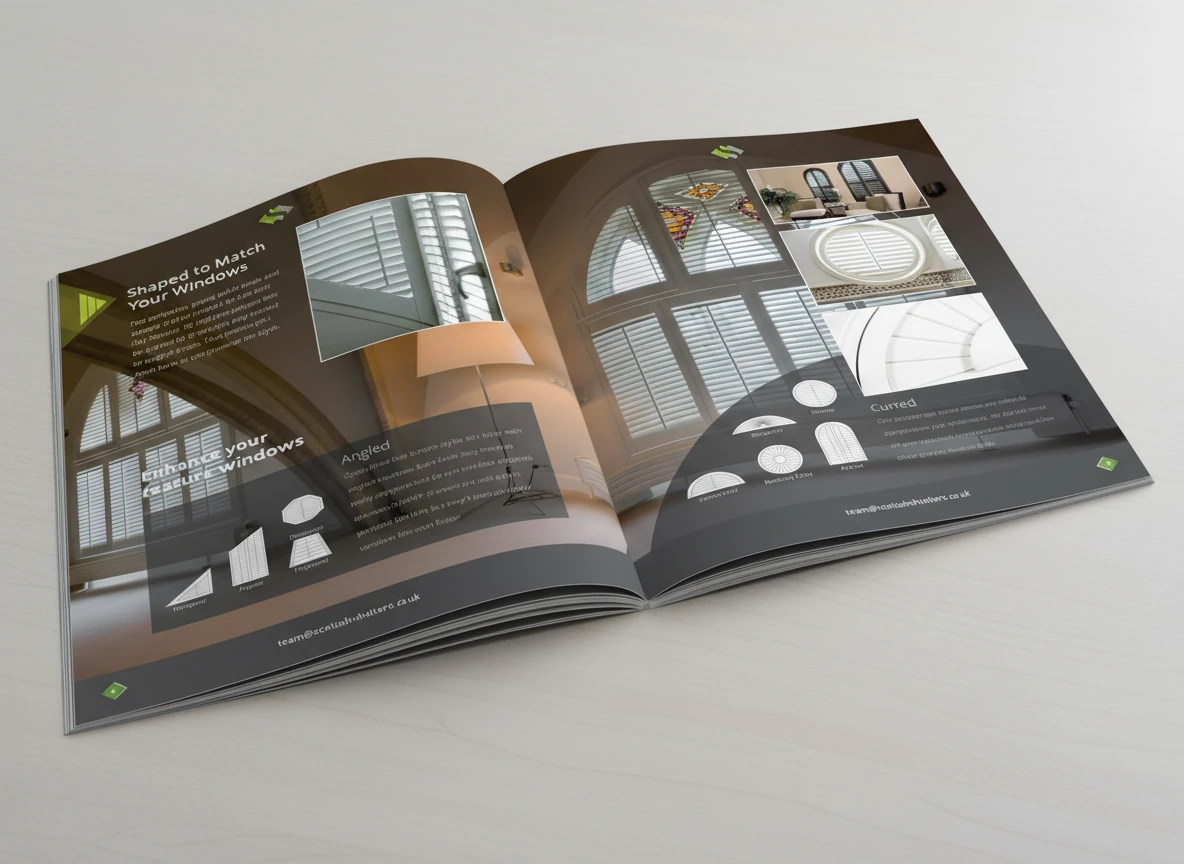
Contact us today for a free in-home consultation or download our brochure for a closer look at our full range, all designed and installed without putting your windows at risk.
Get it right once, and you won’t need to think about it again.
Perfect Fit® is a registered trademark of Louvolite (UK) Limited. This page refers to the Perfect Fit® system nominatively, to identify the product being discussed. The Scottish Shutter Company is not affiliated with, endorsed by, or sponsored by Louvolite.
Inspired by what you've read?
Request a brochure or arrange a no obligation consultation.